Smart Coast
Citizen Science supporting early warning systems and education for coastal resilience
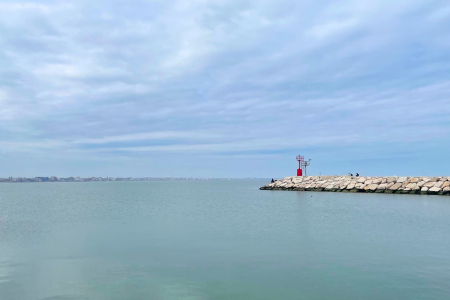
Smart Coast is a coastal resilience initiative that combines science, education and community participation to improve how we observe, understand and respond to marine and coastal risks.
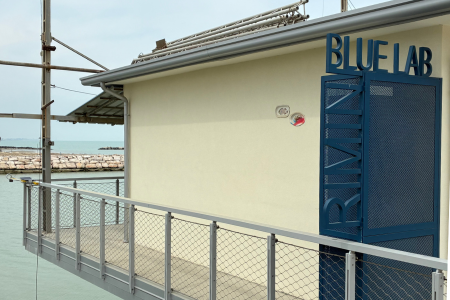
Developed by the Decade Collaborative Centre for Coastal Resilience in collaboration with CMCC and the Rimini Blue Lab, the project builds on hands-on Citizen Science experiences to strengthen early warning systems and promote a shared culture of prevention along the coast.
From local observations to coastal resilience
At the heart of Smart Coast is the idea that coastal communities can play an active role in observing the sea.
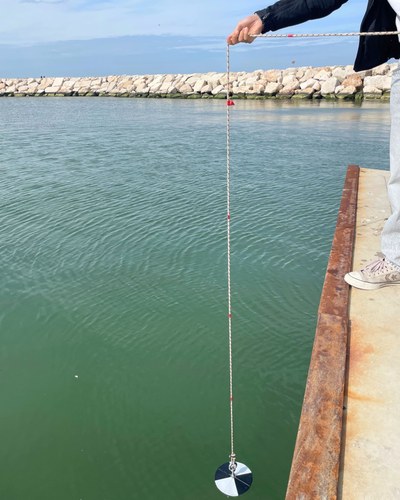
The project started with the installation of a pilot monitoring station at Rock Island, in the Port of Rimini, which hosts sensors measuring atmospheric conditions and sea level. The data collected are shared in real time with European data repositories, contributing high-resolution local information on meteo-marine events.
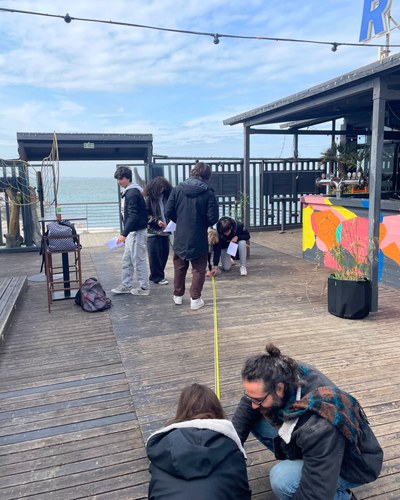
This station is not only a scientific tool, but also an educational space. It has been integrated into the PCTO programme “Climate and Oceanography” at the Einstein Scientific High School in Rimini, where students gain direct experience with climate and marine observations, learning how data are collected, interpreted and used to understand coastal processes.
The Rimini station complements the existing regional sea-level monitoring network managed by ARPAE, which already includes stations in Porto Garibaldi, Cervia, Cattolica, Faro di Goro and Marina di Ravenna.
Expanding a Citizen Science network along the coast
Building on this experience, Smart Coast aims to expand a network of Citizen Science monitoring stations along the Emilia-Romagna coastline.
New stations will be implemented and managed in collaboration with:
- schools and educational institutions
- tourism operators, including beach resorts, hotels and nautical services
- actors from aquaculture and fisheries
Participants will take part in training activities designed to increase awareness of marine conditions, coastal risks and the importance of early warning systems, strengthening the connection between scientific knowledge and everyday coastal life.
The project also involves technology providers and private companies, contributing to the development of sensors, digital tools and applications. These actors act both as innovation partners and as educational contributors, supporting dialogue between technological innovation, climate adaptation and coastal resilience.
Education, participation and impact
Smart Coast contributes to improving coastal monitoring and early warning systems by increasing the spatial detail and local relevance of observations, particularly for extreme marine and flooding events.
At the same time, it promotes active participation by young people and Blue Economy operators, fostering a deeper understanding of coastal dynamics and strengthening community preparedness.
By engaging citizens directly in data collection and interpretation, the project helps build shared responsibility and long-term resilience.
Training activities addressed to schools and tourism professionals reinforce a culture of prevention, while collaboration with technology providers lays the foundation for effective public–private partnerships for climate adaptation.

A shared vision for coastal adaptation
Overall, Smart Coast represents a transformative approach to coastal resilience.
By connecting schools, research institutions, businesses and local communities, the project builds a shared vision of adaptation based on knowledge, collaboration and care for coastal environments, in line with the Quintuple Helix approach.
Album