A New Building Block for the Coastal Resilience School: The "Coastal Resilience to Sea Level Rise" Course Concludes in Bertinoro
A new building block of the Coastal Resilience School, combining global online learning and in-person collaboration to equip early-career professionals facing shared sea level rise challenges.
Published on 22 December 2025 | News
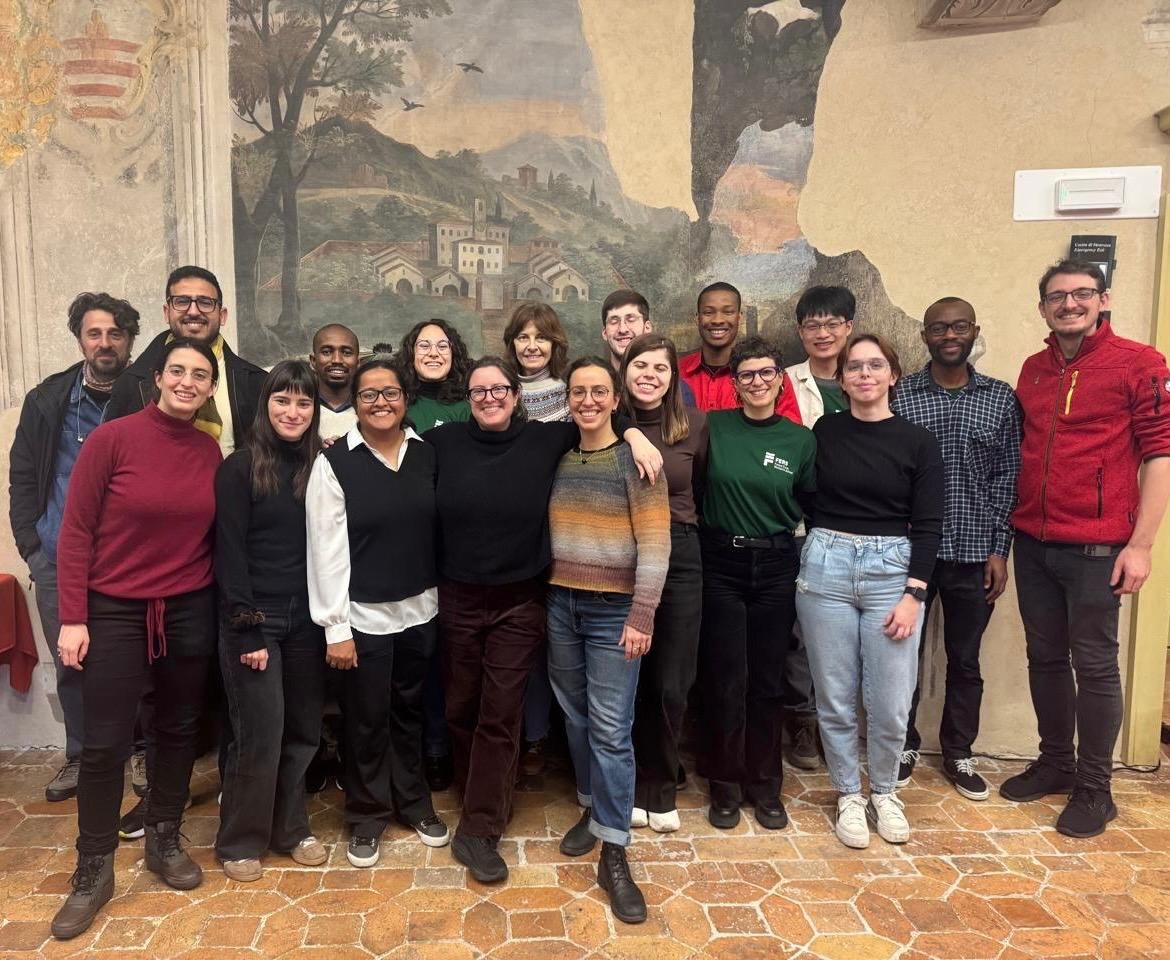
The Coastal Resilience to Sea Level Rise course, recently concluded at the University Residential Center of Bertinoro, represents more than a successful training programme. It marks a new and meaningful building block in the ongoing journey of the Coastal Resilience School—a journey driven by the ambition to expand access to knowledge, strengthen global capacity, and support the next generation of professionals facing one of the defining challenges of our time.
Organised by the Future Earth Research School (FERS) at CMCC in collaboration with the Coastal Resilience School hosted at the Decade Collaborative Centre for Coastal Resilience (DCC-CR) and the OceanTeacher Global Academy (OTGA), the course brought together early-career researchers and professionals from diverse backgrounds and regions. United by a common concern—sea level rise—they engaged in an intensive learning experience designed to connect theory, data, practice, and people.
Each new course delivered within the Coastal Resilience School is conceived as a piece of a larger puzzle. No single programme can address the complexity of coastal risks on its own, but each contributes to a growing, interconnected learning ecosystem. The goal is not only to transmit knowledge, but to reach as many young scientists and practitioners as possible, offering them tools, networks, and confidence to act within their own contexts.
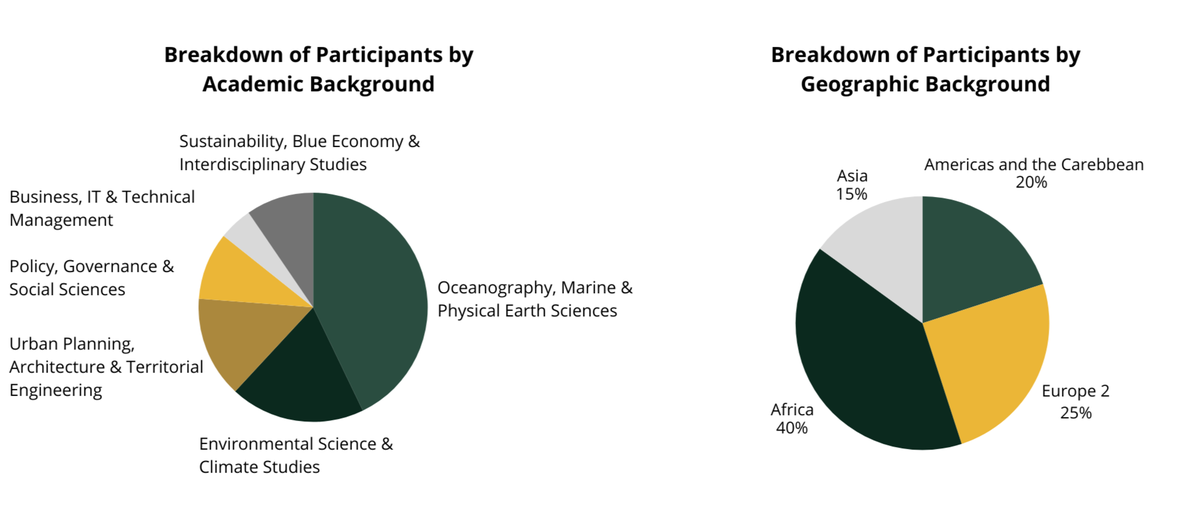
The cohort itself reflected the diversity and interdisciplinarity that the Coastal Resilience School aims to promote. Participants came from a wide range of geographic regions and academic backgrounds, including environmental sciences, oceanography, engineering, planning, and policy-related fields. The selection process was highly competitive and based on a careful evaluation of academic profiles, professional experience, and motivation, ensuring a balanced and engaged learning environment. Particular attention was also given to gender balance, resulting in a cohort composed of approximately 50% women and 50% men, further enriching perspectives and exchanges throughout the course.
A defining strength of this course was its hybrid format, which proved once again how powerful blended learning can be when thoughtfully designed. The online phase, delivered through the OceanTeacher Global Academy platform, allowed participants to follow their own learning paths over several weeks. Through synchronous sessions, recorded lectures, and guided assignments, OTGA functioned as a true connector—an e-learning space where geographic distance disappears and diverse experiences converge.
Thanks to the collaboration with CINECA, hands-on activities using Jupyter notebooks enabled participants to explore sea level rise data, vulnerability mapping, and visualization tools—skills that are increasingly essential for evidence-based decision-making.
The transition to the in-person week in Bertinoro added a different, irreplaceable dimension. Lectures, workshops, group work, and informal discussions transformed individual learning into collective understanding. Being physically together created a sense of co-presence that cannot be replicated online: conversations continued over meals, ideas were tested in real time, and collaborations began organically.
Perhaps most importantly, the week in Bertinoro reinforced a powerful realization: while participants came from different countries, disciplines, and professional paths, they are all facing remarkably similar challenges. Coastal risks, governance complexities, uncertainty in data, and the urgency of adaptation are shared realities. In that shared space, it became clear that the world is, in many ways, smaller than it seems—and that local challenges are part of a much larger global problem.
This sense of belonging to a wider community is at the heart of the Coastal Resilience School’s mission. Beyond technical skills, the School aims to foster connections, mutual learning, and a shared responsibility toward coastal resilience. Courses like Coastal Resilience to Sea Level Rise show how combining global online platforms with focused in-person experiences can create learning environments that are both inclusive and deeply engaging.
As the Coastal Resilience School continues to grow, each new course strengthens this vision: a distributed yet connected community of learners, equipped not only with knowledge, but with relationships and a shared purpose. In a world facing accelerating sea level rise, building resilience is not just a technical challenge—it is a collective one. And education, when designed to connect people as well as ideas, remains one of the most powerful tools we have.