Research projects
Ongoing Projects
European Network on Learning, Assessing, and Researching Governance in Enlargement – ENLARGE
Leggi dettagli
ENLARGE is a three-year academic alliance funded by the Jean Monnet Network and involving 23 partner universities from across Europe. ENLARGE's primary aim is to study the past, present and future trajectories of the EU enlargement and its impact on the EU foreign policy and global identity.
Led by Giuliana Laschi (University of Bologna), the ENLARGE project establishes new transnational connections between European academic centres and promotes dialogue among experts studying the key features of EU enlargement from an interdisciplinary and comparative perspective. To this end, the network will organise conferences, meetings, summer schools, workshops, and other significant research and cultural dissemination activities until September 2028. During these years, a variety of academic publications, surveys, policy papers and podcasts will be published.
Coordinator: Interdepartmental Centre for European Studies "Punto Europa" (CeSIPE), University of Bologna, Forlì Campus - Italy.
EU Research and Education Network on Europe in the World - EU RENEW
Leggi dettagli
Scientific Supervisor: Jan Wouters (University of Leuven)
UNIBO team: Giuliana Laschi (scientific supervisor), Elena Baracani, Sonia Lucarelli, Michela Ceccorulli, Lorenzo Zambernanrdi.
Other partners: UNIWERSYTET JAGIELLONSKI (Krakow - Poland), UNIVERSITE PARIS I PANTHEON-SORBONNE (France), FREIE UNIVERSITAET BERLIN (Germany), INSTITUT BARCELONA D ESTUDIS INTERNACIONALS - FUNDACIO PRIVADA (Spain), UNIVERSITY OF EDINBURGH (United kingdom), RAOUL WALLENBERG INSTITUTET FOR MANSKIGA RATTIGHETER OCH HUMANITAR RATT STIFTELSEN (Sweden), UNIVERSIDADE CATOLICA PORTUGUESA (Portugal), Latin American Faculty of Social Sciences - FLACSO (Argentina), UNIVERSIDADE ESTADUAL PAULISTA JULIO DE MESQUITA FILHO (Brazil), AMERICAN UNIVERSITY (USA), JAWAHARLAL NEHRU UNIVERSITY (India), Seoul National University, Graduate School of International Studies (South Korea), NATIONAL UNIVERSITY CORPORATION THE UNIVERSITY OF TOKYO (Japan), Laboratoire de recherche en droit international et européen et relations Maghreb-Europe (Tunisia), UNIVERSITY OF PRETORIA (Republic of South Africa), UNIVERSITY OF DAR ES SALAAM (Tanzania), ADDIS ABABA UNIVERSITY (Ethiopia).
EU-RENEW (EU Research and Education Network on Europe in the World) is an Erasmus Jean Monnet Network bringing together 19 outstanding higher education institutions from Europe (9), Asia (3), Africa (4), and the Americas (3), with the goal of improving knowledge and enhancing debate on ‘Europe in the World’.
Focusing on the exchange and dissemination of pedagogical tools and innovative research, EU-RENEW aims to promote a global dialogue on the role and place of Europe in a fast-changing global order.
As a truly global and interdisciplinary network, EU-RENEW takes into account local dynamics and practices in Europe and beyond, with particular attention to global-local interaction at the regional level, external perceptions of Europe and the European Union, and the diffusion of European practices.
Concept and methodology
EU-RENEW’s primary goal is to collect, share, and discuss academic and research material that sheds light on Europe’s place and role in today’s changing global order. It seeks to grasp and make sense of the most up-to-date and innovative scholarship and educational resources on Europe in the World by deploying a multilayered data collection system that draws on the partner institutions’ geographical and disciplinary diversity. Each partner will systematically input references to their own research and educational material; the work of other networks and initiatives of which they participate; and materials produced within their own geographical area.
Through regular and dynamic interactions among 19 higher education institutions, EU-RENEW will review and disseminate the most relevant research on Europe and global affairs. Its outputs will include a podcast and webinar series, an open-access handbook, blog posts, a Massive Open Online Course (MOOC), and a newsletter. The quality and relevance of the network’s output will be ensured by a standing editorial board and by review meetings held both online and in person. By valuing and contextualizing the most insightful scholarship, EU-RENEW will foster an ongoing conversation on Europe’s role and place in world affairs.
Date and duration: 01/01/2023 - 31/12/2025
Financing: European Commission, DG Education and Culture, Erasmus + Programme, Jean Monnet Action
GEO POWER EU
Leggi dettagli
Scientific Coordinator: University of the Peloponnese (UoP) & PEDIS (Greece)
UNIBO TEAM: Francesco Privitera (Scientific supervisor), Margherita Capannoli, Giuliana Laschi, Marco Puleri
Other partners: Center for Advanced Studies Southeast Europe (CAS SEE) - University of Rijeka (Croatia), European Neighbourhood Council - ENC (Belgium), Institute for Democracy “Societas Civilis” – Skopje (North Macedonia), Institute for Development and Social Initiatives (IDIS) “Viitorul” (Moldova), Odesa I. I. Mechnikov National University - ONU (Ukraine), South-East European Research Centre - SEERC (Thessaloniki - Greece), Swedish Institute of International Affairs - UI (Sweden), The Democratization Policy Council (Germany), University of Belgrade – Faculty of Political Science (Serbia), VE Insight (Vienna - Austria), Vienna Institute for International Economic Studies (Austria).
Project overview
Ambition: GEO-POWER-EU’s main objective is to contribute to the empowerment of the EU to manage security threats within the deteriorating geopolitical environment that lies in its Eastern Neighbourhood and in the Western Balkans. The project’s main goal is to articulate a proposal for a comprehensive EU strategy towards these regions that will employ new and reformed means and policy instruments, taking into consideration foresight concerning the strategic ambitions of other geopolitical actors.
Impact: GEO-POWER-EU focuses on strengthening the security dimension of EU’s policies by producing evidence based up-to-date research output and policy recommendations. The project departs from the assumption that the enlargement and EaP policies have progressively reached a critical point, accentuated by the Russian war of aggression in Ukraine, which calls for major revisions in order to produce a well-informed strategy and additional reliable tools for policy making, such as scenarios, that can be used by policy makers. The goal of the project is improvement of the EU neighbourhood policy and accession process, thanks to a clear vision for the political agenda of the EU towards the EaP and the WB, based on a deep and nuanced analytical basis.
Conceptually, GEO-POWER-EU will link both the enlargement and EaP policies, two areas traditionally studied as two distinct political regions falling under different policy radars, in order to reflect the post-Russian invasion in Ukraine EU policy needs. Methodologically, the project will combine traditional quantitative and qualitative methods (desk research, semi-structured interviews, focus groups, case studies and a population survey in the WB and the Associated Trio), together with digital methods (Sentiment Analysis), a foresight exercise and scenario testing with a Serious Game, provisionally named ‘Strategum’. The deliverables also include the creation of three Indices, which will build a continuously updated ‘Interdependence Database’, which will become publicly available. The methods chosen will cover past, present and future policy analysis and impact.
Financing: The GEO-POWER-EU project is funded by the European Union’s Horizon Europe research and innovation programme (HORIZON-CL2-2023-DEMOCRACY-01).
Completed Projects
Past and Present Migration Challenges: what European and American History can teach us - PPM
Leggi dettagli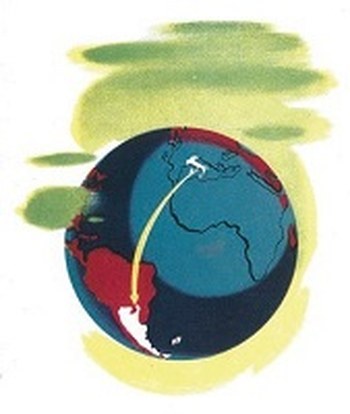
Project Director: Francesca Fauri
Other Professor: Debora Mantovani
Partner: Goethe University Frankfurt (Germany), Universidade de Caxias do Sul (Brazil), Consejo Nacional de Investigaciones Científicas y Técnicas (Argentina), Università La Sapienza di Roma, University Residential Centre of Bertinoro
The project “Past and Present Migration Challenges: what European and American History can teach us” (PPM) has two main aims:
Conduct research on the history of EU-America migration movements in the light of the present immigration challenge through trans-national collaboration:
Thanks to the confrontation of past and present migration experiences and through a multi-disciplinary approach that includes economic, political and sociological contributions from both Continents, the aim of this project is to shed light on the complex nature of the migratory movement and use the past as a way to better understand present challenges within the EU. The aim is also to create a network of international scholars and students. The research team will be composed by academics from Europe (Italy, Germany) and America (Argentina, Brazil and the US) and will be coordinated by Professor Francesca Fauri, Jean Monnet Chair and professor of the University of Bologna.
Dissemination of knowledge within university and with non-academics:
The project aims at fostering the discussion on the role of migration studies, migrants’ history and integration and the EU migration policy at the university and civil society level. The goal is also to make the general public aware of what the EU is and what it does in relation to immigration needs and challenges, highlighting its value and founding principles like tolerance, help for the weak and non-discrimination.These objectives will be reached thanks to several activities: two international workshops and conferences, an Exhibition in Buenos Aires and several university seminars and meetings with schools in Italy and Argentina analysing EU migration policy and immigration movements.
To reach those goals, the main steps and activities will be:
a) Two workshops, one in Argentina at the Hotel de Inmigrantes (Immigrants’ Hotel) in Buenos Aires which houses the National Museum of Immigration and one in Italy at the University of Bologna, Forlì Campus. The research team will discuss and exchange information on their research. The results of these cross-sectorial discussions will be presented in the final conference and in the final publication;
b) Two international conferences one in Argentina and one in Italy. The conferences will present the results of the research to the general public. The conferences will be organised in a collaborative and interactive way, trying to include the audience in analysing the different dimensions of the migration flows in Europe and America with particular attention to the economic, social and political impact. The debates will be incorporated in the final publication;
c) An exhibition (pictures and documents) in Buenos Aires at the Museum “Hotel des Immigrantes” on the Italian enterprises and entrepreneurs in Argentina.
d) In view of the project aims and expected impact 10 seminars to be held by professor Fauri at the University of Bologna will cover the history of migration from and to Europe, the integration challenges yesterday and today and the evolution of the EU immigration policy.
e) In order to enhance the interest and knowledge over the issue, some specific meetings will be held in high schools in the Emilia Romagna region and also with younger students. The involvement of the Dante Aligheri High School in Buenos Aires is also foreseen.
f) The dissemination of the results will be further enhanced by the use of a specific section on the EDC Punto Europa Forlì website and by the use of Social Media channels (Facebook, Twitter, Instagram and youtube). Moreover, to favour the dissemination of results among students, the WebTV of the Campus of Forlì will be involved, with some short videos/interviews explaining the main aspects of the research and of the results. Finally, to reach the general public, a monthly newsletter will be set up. The newsletter will consist in short updates on the research activities and on thematic insights.
The professors involved in this project have extensive knowledge and experience in migration studies. The analysis will have a cross-sectoral and multidisciplinary approach, in order to maximise the potential of the research and its dissemination. Another key aspect of this project will be the proactive collaboration among academics, university, hight school and even elementary students and the general public thorugh the activities envisaged. Finally, it must be underlined that the academic partnerships and network established with this project will be essential to further engage in multidisciplinary and cross-national research over other EU relevant areas of interest
Date and Duration : 01/09/2020-31/08/2022
Financing: European Commission, DG Education and Culture, Erasmus + Programme, Jean Monnet Action – Projects
Over the Atlantic. Eu and Latin American Relations: Between Diplomacy and Paradiplomacy - OTA
Leggi dettagliScientific Coordinator: Prof. Giuliana Laschi (University of Bologna)
Partners: University of Concepción (Chile), Instituto Social del Mercosur (Paraguay), European Institute of International Studies (Salamanca/Spain – Stockholm/Sweden), Pompeu Fabra University (Barcelona, Spain), University of the Azores (Portugal), University of Nantes (France)
Project Description:
The project aims to analyze diplomacy and paradiplomacy between the European Union and Latin America through the creation of an international network of students, researchers, and university professors. This highly relevant topic has received limited attention in the academic literature.
The research team comprises European (Italy, Germany, Spain) and Latin American (Paraguay, Chile) scholars and is coordinated by Prof. Giuliana Laschi, Jean Monnet Chair in the History of European Integration and Professor at the University of Bologna.
Another key objective of the project is to examine the role of paradiplomacy at the university level, bringing the discussion to a wider public audience. To this end, international events and school visits will be organized to explore EU–Latin America relations, with a particular focus on paradiplomacy.
The professors involved in this project possess extensive expertise in European Studies. The analysis will be cross-sectoral and follow a multidisciplinary approach to maximize both the research potential and the dissemination of results.
Date and Duration: 01/09/2019 – 31/08/2021
Financing: European Commission, DG Education and Culture, Erasmus+ Programme, Jean Monnet Action – Projects
Europe post-1945: Integration between Decolonization and Migration? - INDEMIG
Leggi dettagliScientific Coordinator: Prof. Giuliana Laschi (University of Bologna)
Partner: University of Cagliari
Project Description:
The project adopts a multidisciplinary approach, with a particular focus on migration flows from former colonies to European countries, aiming to analyze how each country has addressed migration and contributed to the development of a genuinely European approach to the issue.
The project considers these processes as interconnected and seeks to understand whether both the decline of European colonial power and the process of European integration have shaped post-war European history and policies. Migration represents a common thread in both processes: flows linked to decolonization involved migrants from non-European countries, while European integration was constructed around the principle of free movement for citizens across EU countries.
Moreover, this process influenced the construction of a European identity, rooted politically and culturally in the post-war period. Examining how extra-EU migration was managed and represented in the media and political discourse also reveals how European identity developed in contrast to the “other.”
The ultimate objective of the project is to stimulate research, enhance knowledge, and improve understanding of the European integration process, both historically and in its current forms, at multiple levels—from academia to schools and civil society.
The first phase of the project will focus on in-depth research. Initial findings will be disseminated and discussed through a roundtable for Master’s students and a workshop involving doctoral candidates and early-career researchers, aiming to foster critical dialogue among young academics.
Subsequently, a conference will bring together historians and experts from different fields to discuss the research themes. Legal scholars, economists, historians, and political scientists will contribute to a deeper understanding of the topic through an open dialogue with civil society.
To share research outcomes with the wider public, two public roundtables were organized on the occasion of Europe Day (9 May 2018 and 2019), where key aspects of the research were presented and discussed.
All produced content is made accessible to school students. The module “The European Integration Process after World War II: Between Decolonization and Migration”, with a particular focus on Europe’s relations with former colonies, is specifically designed for schools. Some school sessions take place both in Romagna and in Cagliari, aiming to raise awareness among students and teachers of the links between historical developments and current issues.
Research and dissemination activities include multiple outputs: an online research community for project participants, a dedicated website, a DVD, targeted educational materials, and a publication on the research topic.
Date and Duration: 01/09/2017 – 31/08/2019
Financing: European Commission, DG Education and Culture, Erasmus+ Programme, Jean Monnet Action – Projects
-
Project results
Erasmus+ database
Shaping Fair Cities: : integrating Agenda 2030 within local policies in times of great migration and refugees flows
Leggi dettagli
Scientific Coordinator: Emilia-Romagna Region
Scientific Coordinators (UNIBO): Marco Borraccetti and Giuliana Laschi (University of Bologna)
Other Faculty Involved: Marco Balboni, Marco Borraccetti, Francesca Fauri
Other Partners: Ayuntamiento de Alicante (Spain), Bashkia Shkoder (Albania), Grad Split (Croatia), Falköpings Kommun (Sweden), Fundacja Centrum Badań Migracyjnych (Poland), Judetul Iasi (Romania), Regionalny Ośrodek Polityki Społecznej w Poznaniu (Poland), Asociatia Biroul Regional pentru Cooperare Transfrontaliera Iasi pentru Granita Romania – Republica Moldova Asociatie (Romania), Comune di Forlì, Comune di Modena, Comune di Reggio Emilia, Conselho Municipal da Cidade de Pemba (Mozambique), Generalitat Valenciana (Spain), Associazione Gruppo di Volontariato Civile – GVC (Italy), Dimos Patreon (Greece), Vejle Kommune (Denmark).
Project Description:
Shaping Fair Cities recognizes, values, and strengthens the role that cities and local governments must play in achieving the 17 Sustainable Development Goals (SDGs) of the United Nations 2030 Agenda, officially adopted in 2015 by representatives of local and regional governments during a historic UN summit in New York.
Through a pan-European, multi-stakeholder partnership, the project seeks to raise awareness and actively engage local decision-makers, public officials, organizations, and citizens in localizing the SDGs. It highlights the crucial role of local governments in implementing the new set of goals and paves the way for a local 2030 Agenda across eight European countries and two EU partner countries.
Specifically, the project will mobilize local authorities in implementing goals related to migration and local policies, with a strong gender perspective (SDG5), promoting peaceful and inclusive societies (SDG16), making cities inclusive, safe, resilient, and sustainable (SDG11), and addressing climate change and its impacts (SDG13).
Thanks to Shaping Fair Cities, by 2020 fourteen local authorities (four regional governments, eight municipalities in European countries, and two extra-European partners), representing an urban population of 3,697,600 people, will have adopted an action plan to implement, communicate, and monitor the SDGs at the local level, with a particular focus on SDGs 5, 11, 13, and 16, emphasizing migration and gender.
Date and duration: 21/12/2017 – 21/12/2020
Financing: European Commission, Programme “Raising Public Awareness of Development Issues and Promoting Development Education in the European Union – Development Cooperation Instrument” (EuropeAid/151103/C/ACT/MULTI)
New Policies and Practices for European Sharing Cities - EUCITY
Leggi dettagli
Scientific coordinator: Giorgia Pavani
Others: Daniele Donati, Stefania Profeti, Claudia Tubertini, Chiara Alvisi.
Partner: Università di Palermo
Cities are the main receptors of the market changes because they stand as interconnecting links between society, State and the European Union. The sharing economy phenomenon undermines certain models of governance, provision of services and the supply of goods on market.
The regulatory challenges of the sharing economy not only stem from the novelty of the p2p economic model, but also from an entirely new distribution of regulatory responsibilities across the involved actors. Unlike the regulation of the traditional market, regulating the sharing economy is chiefly a municipal issue. This brings about a kind of natural experimentalism, which is highly dependent on the local level. At the same time, European Law is also relevant. Currently, both local administrators and private operators of some sectors of the market (e.g. home, transport), but also citizens who want to experience new services are obliged to act within a normative chaos.
The studies related to this issue are purely theoretical and fail to consider the complexity of this phenomenon. It is necessary to move beyond this approach to create new policies and develop synergies between academia and civil society that will provide a concrete contribution to the stakeholders. In this framework, it is crucial to investigate local tools and regulatory approaches that are suited to the specific urban governments and consistent with EU law.
EuCity is proposed as an innovative project that combines the research and teaching experience of its members to offer a "new product" with a clear idea: “from the Academic world to Civil society”.
The main aim of EuCity is to offer concrete support to the public administrator in the creation of new policies and regulatory measures within a new normative framework and to aid public officers to follow the good practices that will be developed during the lifetime of the project.
Other EuCity objectives are:
- to contribute to the development of interdisciplinary studies on the consequences of a sharing economy at the local (city), national and European level;
- to inform citizens of new forms of services, opportunities, and social solidarity initiatives or other forms of contact between the market and the city;
- to collaborate with the Representatives of consumer associations to understand their real needs when connecting with this new business model, and the effects of European law on protection of the consumers;
- to create contact between consumers and public administrators.
Date and Duration: 1/9/2017-31/8/2019
Financing: European Commission, DG Education and Culture, Erasmus + Programme, Jean Monnet Action – Projects
Jean Monnet Centre of Excellence "The European Union in World Politics: What Power? What Leadership? A Multidisciplinary Approach" - WORPOL
Leggi dettagli
Scientific Coordinator: Giuliana Laschi.
Scientific Committee: Francesca Fauri (University of Bologna - Italy); Giulio Ecchia (University of Bologna - Italy); Marco Balboni (University of Bologna - Italy); Marco Borraccetti (University of Bologna - Italy); Sonia Lucarelli (University of Bologna - Italy); Paolo Zurla (University of Bologna - Italy); Mauro Maggiorani (University of Bologna - Italy); Carlos Eduardo Pacheco Amaral (University of Azores - Portugal); George Contogeorgis (University of Athens - Greece); Maria Manuela Tavares Ribeiro (University of Coimbra - Portugal); Alexis Vahlas (University of Strasbourg - France); Raphaela Averkorn (University of Siegen - Germany); Ana Maria Rabelo Gomes (University of Minas Gerais - Brasil); Alexandre Mendes Cunha (University of Minas Gerais - Brasil); Carlos Eduardo Suprinyak (University of Minas Gerais - Brasil).
Summary: This project is directed to the study of patterns concerning the European Power in relation to the rest of the world. The topic will be addressed through five subthemes closely interrelated: migration, security, development cooperation, social economy and human rights. If the literature deals with each of these themes separately, the aim here is to understand them in their interrelations and by adopting a truly interdisciplinary (law, history, economy and political science) perspective. This will guaranty a constructive dialogue and will foster a significant cross fertilisation with international project partners such as Azores, Germany, Greece, Portugal, France and Brazil.
This research is particularly important and timely for several reasons. The EU is widely appreciated for its specific international stance (as a sort of civilian power of a new sort), but few consider it to be a world leader. An exploration of the reason of this and the comparison between strengths and weaknesses will therefore be undertaken. In addition, the project explores the possible internal impact of the EU’s external stance: as well as the interaction with the external environment can be considered as a gradual result of the integration process
The general aim of the project is to show how and why the EU has come to assume the status of a global power, and to what extent this status affects the international context. The activities foreseen include research, teaching and the organisation of several events and outputs. Given the high importance of the theme of research, an impact in the international academic community and in the local civil society is envisaged. The meetings of general monitoring of the ED Scientific Committee, the percentage of conference’s lecturers going on with the research activity, the attendance forms and the questionnaires for the general public and the number of visitors of the website will constitute the main indicators of achievement.
Dates and duration: 1/9/2014-31/8/2017
Financing: European Union. Programme: Erasmus + - Jean Monnet
European Model: past, present and future. Interpretations, challenges, sustainability
Leggi dettagliScientific Coordinator Giuliana Laschi.
Scientific Committee: Francesca Fauri (University of Bologna - Italy); Giulio Ecchia (University of Bologna - Italy); Marco Balboni (University of Bologna - Italy); Marco Borraccetti (University of Bologna - Italy); Sonia Lucarelli (University of Bologna - Italy); Paolo Zurla (University of Bologna - Italy); Mauro Maggiorani (University of Bologna - Italy); Carlos Eduardo Pacheco Amaral (University of Azores - Portugal); Cristina Blanco Sio Lopez (Centre Virtuel de la Connaissance Européenne - CVCE).
Summary: This project aims at investigating, from a multidisciplinary and diachronic perspective, the origins and evolutions of the “European model” in the international system and offer a critical review of its past and more recent successes and shortcomings.
Methodologically, the project encompasses both academic research – that will be conducted in a plurality of different archives- and the development of a multi-disciplinary dialogue opened to the public, and the civil society. Scientifically, research groups will coordinate their work through a web platform and regular meetings; PhD students and professionals (most of them unaware of the opportunities granted by the Jean Monnet programme) will be invited to participate in order to enrich the dialogue with original ideas and insight. Different perspectives will integrate in open seminars, meetings, conferences and the research output will be an invaluable source for the teaching courses of European integration history taught by the members involved in this project. The academic community will be positively impacted by the dissemination of the work’s results in terms of enhanced knowledge and deeper reflection. The inclusion of the civil society and other institutions in the debate over the topic is also a peculiar feature of the project, that will be granted by the project management of the Europe Direct Centre Punto Europa Forlì and its Scientific Committee. Citizens’ and non-University students will be provided with useful tools of knowledge to understand and interpret the current state of crisis of the European Union aside the common media-information. Finally, the collaboration with the Centre Virtuel de la Connaissance sur l’Europe offers the unique opportunity to link the Italian academic world, the local civil society of Forlì and the European dimension in an original triangular way.
Dates and duration: 1/9/2013-31/8/2014
Financing: European Union. Programme: Lifelong Learning - Jean Monnet
European Cosmopolitanism and Sites of Memory through Generations (ECoSMeG)
Leggi dettagliScientific Coordinator Maura De Bernart.
Partner: Marin Barleti University/ Albanian Institute of Public Affairs (Tirana – Albania); Centarzaeuroppskestudije - European Studies Centre (Zagreb – Croatia); University of Teramo (Teramo – Italy); University of Calabria (Arcavacata di Rende-Cosenza – Italy);
Summary: The main idea is to try to evaluate on one side how deep rooted and diffused are the European values connected to the rejection of all war and genocide, and, on the other side, how all this is in turn connected to the preservation andmeanings of the memory of Shoah and of specific local sites of memory often still little known, through generations.Theoretically and methodologically, we refer to a consolidated literature on Shoah and memory, European unificationand cosmopolitanism; on memory of Shoah, other genocides, global memory and human rights (see Levy, Sznaider,Beck, Alexander etc.); and to the studies of Hilberg, Friedlander, Bauer, Ofer etc. The Project lasts 18 months, intendingto preserve some little known memory sites and pieces of history, to foster intergenerational dialogue on what reallyhappened and why, and how to prevent such evils. It includes 4 steps, involving at Step 1 that each University partner,with local stakeholders, possibly associating scholars in Ukraine and Bosnia, will identify 4 students under 30, withgender balance, to study relevant but little known sites of memory, in history and today, and represent them in the wayschosen by young people (narratives, photos, videos etc.). The sites of memory, little known or whose memory is fadingaway, are 4 in Forli, 6 in Teramo, 1 main camp with 21 subcamps in Calabria, 3 sites in Zagreb and 3 sites in Tirana. AtStep 2 the results of 1 are locally submitted by the young to local survivors or other witnesses, in video/audio-tapeddialogues, to be the basis for further steps, under supervision of teams and experts. At Step 3 the final product of 1 and 2is presented and discussed with university and school students, citizens etc in local dissemination, while at Step 4concerns crossed dissemination, a joint final conference, and dissemination through an ad hoc website and othermaterials. During the course of this project we plan to maintain contact with YadVashem.
Dates and duration: 1/12/2012-31/05/2014
Financing: European Union. Programme: Europe for Citizens – Active remembrance.
From Memory to Europe! - Me2EU
Leggi dettagli
Scientific Coordinator Giuliana Laschi.
Scientific Committee and partner: Ariane Landuyt (University of Siena - Italy); Carlos Eduardo Pacheco Amaral (University of Azores – Portugal); Maria Manuela Tavares Ribeiro (University of Coimbra – Portugal); IoanHorga (University of Oradea - Romania); Paul Allies (University of Montpellier I – France); Denis Rolland (University of Strasbourg – France); George Contogeorgis (Pantheion University, Athens – Greece); Stefan Bielanski (Jagiellonian University, Krakow – Poland); Comune di Forlì (Italy); Centre of Assistance for Nongovernmental Organizations – CENTRAS (Bucharest – Romania); Association for Political Science Students of the University of Bucharest (Bucharest – Romania);
Summary: Our project was based on the belief that European values and principles must be cultivated since youth, because in this way young generations become aware of the fact that in EU citizens can influence the political decision in order to keep peace as a shared gift. Our experience in schools and university shows that memory is at risk.The action scheduled 5 main commemoration and reflection activities developed from Oct.2010 till Sept 2011:
A workshop for university students and school teachers: a workshop on the process of EU integration departing from the awareness of the full dimensions and tragic consequences of the 2WW, was held on 10th – 11th December 2010 for a group of 41 EU university students and 21 school teachers. Several high value professors of EU studies from all over EU Universities taught the “student teachers” how to transmit their knowledge to the new generations. Focusing in Nazism and Stalinism and other European examples of authoritarism and massive deportation or persecutions, the workshop represented a significant moment of reflection and debate.
88 interactive seminars in schools held by student teachers from Dec. 2010 till May 2011 (62 in Forlì-Cesena-Faenza, 26 inBucarest). Each seminar lasted 2 hours. The student teachers provided the students with useful materials on the theme.
A competition on the theme “Me2EU - From memory to Europe”: a public competition has been launched for the schools of the Province of Forlì-Cesena, Bucharest and all schools linked to them through the Comenius network.Young people 12-18 were invited to produce an article or a multimedia product/video in which they will interview the witness on the theme of “Nazifascism, Shoah and genocide: your memories of the past”. The students had to collect memories of victims, perpetrators, bystanders, rescuers, preserving memories in an intergenerational dialogue of awareness and reconciliation. Better works have been collected on the DVD and on the Website.
A commemorative event: the Day of Memory 01/27, was organized and celebrated on 26th - 28th January by ED Forlì in collaboration with several local and international authorities and scholars, with special events in memory of the victims of the Holocaust.
The Europe Day 05/09 was organized by ED Forlì. Awareness event with the participation of schools and local authorities, open to civil society. Achieved results of the school competition will be illustrated and debated.
Dates and duration: 1/10/2010-30/9/2011
Financing: European Union. Programme: Europe for Citizens – Active Remembrance
Inclusion and outstanding: the complex role of EU in the world
Leggi dettagliScientific Coordinator Giuliana Laschi.
Scientific Committee and partner: Francesca Fauri (University of Bologna - Italy); Marco Balboni (University of Bologna - Italy); Marco Borraccetti (University of Bologna - Italy); Sonia Lucarelli (University of Bologna - Italy); Paolo Zurla (University of Bologna - Italy); Mauro Maggiorani (University of Bologna - Italy); Ariane Landuyt (University of Siena - Italy); Stefano Bianchini (University of Bologna – Italy); Sonja Bjeletic (Faculty of Administrative and European Studies, Podgorica – Montenegro); Vito Bobek (University of Maribor); George Contogeorgis (University of Athens).
Summary: By running this action we intend to: promote multidisciplinary discussion, reflection and knowledge about the process of EU integration in the framework of its worldwide role within the international academic communities, thanks to the participation of several high value professors of EU studies; rise awareness on EU and its role in the world in particular among the outlined target groups (school teachers and Adult people), with the support of the local authorities of the Forlì-CesenaProvince; strengthen interest on the EU in order to enhance participation to European debate among students and young researchers at an international level. The action foresees Research and conference for academic professors, with involvement of young researchers, seminars, roundtables and other innovative activities, like simulations or transnational debates for BA, MA and Phd students, a seminar in a non-EU country about EU (Montenegro), dissemination activities among specified target and general public.The outputs will be a thematic website, a scientific publication, dissemination materials.Among the results we should consider the benefits deriving from the “European co-operation” between transnational institutes and the new dialogue and partnership between EU (Italy, Greece and Slovenia) and non-EU countries (Montenegro).The monitoring and the assessment of the project will be guaranteed by the Scientific Board of the project and by the Scientific Committee of Europe Direct Forlì.
Dates and duration: 1/9/2010-31/8/2011
Financing: European Union. Programme: Lifelong Learning - Jean Monnet
Project to Support the Educational System in the Sahrawi Camps and the Preservation of Sahrawi Historical and Cultural Memory
Leggi dettagliCoordinators: Giulia Olmi (CISP), Giuliana Laschi
Other Faculty Involved: Marco Balboni
Partners: Municipality of Forlì, CISP, Emilia-Romagna Region
Summary:
This project represents a collaboration between the Europe Direct Centre Punto Europa, CISP, and the Municipality of Forlì, focusing on activities in cooperation with the Sahrawi people. The initiative has evolved through a series of continuous projects since 2006. Punto Europa provides support in the development and improvement of educational materials and textbooks, as well as in activities aimed at preserving Sahrawi historical and cultural memory and promoting human rights.
Financing: Emilia-Romagna Region, Ministry of Foreign Affairs, Municipality of Forlì
Jean Monnet Centre of Excellence “Rule of law and fundamental rights: the EU model”
Leggi dettagliScientific Coordinator Lucia Serena Rossi – Giuliana Laschi
Summary: This project is directed to the study of patterns concerning the protection of fundamental rights in the EU level.The European Union has been made promotrice of an extremely advanced model of protection characterized from the maximum extent of beneficiaries and from the existence of a text, the Charter of Fundamental Rights, which has as a core aim the visibility of the rights for everyone who lives in the European territory. This research means to touch several aspects: for instance, European and national jurisprudence, that more and more frequently recalls the Charter, even if it’s formally without any legally binding effects, conferring to it an important legal value. Another aspect is the evaluation of the respect and the protection of fundamental rights in the drafting on the implementation measures in European policies.The multidisciplinary character, which is possible thanks to the interaction of historical, economic, politics and legal matters, reveals the added value of the research.This project wants to achieve two goals. From a scientific point of view, the project is stiff to complete a critical analysis on the protection of fundamental rights in the European policies context. In order to encourage the activity of studious young people, financings will be assigned also to the institution of scholarships.From a divulgative point of view, the main aim is: to realize scientific monographies or contributions; to organize periodically conventions, seminaries and other events opened to public opinion and civil society; to lead an action of sensibilization in the schools; to elaborate and update an on –line database on the respect of fundamental rights; to take care of a daily press release on the main European arguments dealt from the main European daily journals; to product and distribute informative materials in order to achieve the wider population possible, particularly concerning weak people and new generations. All the works realized in the within of the Center of Excellence will be present to the scientific community in seminaries and conventions where the main experts on European matters will be invited. Moreover it will provide to their publications in specialized reviews or inside the series of the CIRDCE, edited by the EditorialeScientifica, one of the most important Italian publisher specialized in European law or inside the series “European progress. Collana di Studi europei”, edited by Punto Europa Forlì and published by CLUEB.
Dates and duration: 1/9/2007-31/8/2012
Financing: European Union. Programme: Lifelong Learning - Jean Monnet
Europe, a Civilian Power
Leggi dettagliScientific Coordinator Giuliana Laschi.
ScientificCommittee and partner: Francesca Fauri (University of Bologna - Italy); Marco Balboni (University of Bologna - Italy); Marco Borraccetti (University of Bologna - Italy); Renata Lizzi (University of Bologna - Italy); Paolo Zurla (University of Bologna - Italy); Mauro Maggiorani (University of Bologna - Italy); Mario Telò (Université Libre de Bruxelles – Belgium); Furio Cerutti (University of Firenze – Italy).
Summary: What the project proposed by Punto Europa of Forlì wants to do, is to start a multidisciplinary reflection on the role of Europe in the world, starting from the in-depth analysis of the concept of Europe as a Civilian Power. It is a subject which has never been organically and multidisciplinary dealt with, as it has emerged from the first moment of confrontation organized by Punto Europa together with the Institutd’ÉtudesEuropéennes of the UniversitéLibre in Brussels, thanks to the collaboration between Prof.Giuliana Laschi and Prof. Mario Telò. In that occasion the debate and discussion have offered many hints to re-start the confrontation; what has emerged with strength is the need to emphasize the scientific analysis on this issue. The concept of Europe as a Civilian Power, consists particularly of the international action of a subject, so as Prof.Telò has proposed – the European Union – which promotes multilateralism, the cooperation between countries and the political setting of conflicts, limiting the use of force. The aim of the project is to begin a multidisciplinary confrontation on the concept of Europe as a Civilian Power. Concept that we want to deal with from every point of view: historical, political, juridical, financial, philosophical and sociological. To pursue this aim, many national and international experts of different disciplines will be involved. The long-term aim is, indeed, after the first meeting, to create an international research network on the external relations of the EU, with a special focus on the concept of Europe as a Civilian Power. In such a moment of stagnation in the European building process as it is today, the analysis that will be carried out has also the purpose to try to innovate European studies, in order to either prevent or contrast effectively the trend towards a national falling back of many of the disciplines involved on the study of the EU: the question is also to explore different ways which can re-launch, in the new difficult contest, the European studies.Within this project, we suggest to arrange a three-days international meeting; to employ new technologies, implementing a thematic web site, broadcasting the congress in streaming, collecting documents, audio/video materials; to carry out multidisciplinary scientific researches on this issue, with a final publication of the essays written after the research period; to elaborate material for the general public either via web and/or papery, to broadcast through Europe Direct network and in schools.The aim of the project is to involve as many people as possible, in particular representatives from the academic world of all European universities, but also young researchers, students, civil society and citizenship on the whole (through the involvement of associations, regional and local institutions). Such involvement could be either direct or indirect, through the participation to research and meetings, but also using innovative means (video-conference, skype, internet) for the vision of web materials or through the dissemination of simple information to the general public.
Dates and duration: 1/9/2007-31/8/2008
Financing: European Union. Programme: Lifelong Learning - Jean Monnet
Towards a security community for the Mediterranean. A feasibility study for an intercultural text book
Leggi dettagliScientific Coordinator Lorenza Sebesta
Scientific Committee and partner: Giuliana Laschi (University of Bologna - Italy); ChibliMallat (University St. Joseph, Beyrouth – Lebanon); Maurice Vaïsse (Institutd’EtudesPolitiques de Paris – France); Charles Maier (Harvard University - USA).
Summary: The mains objectives of the project are:a) to create a university network which will not be based on disciplinary areas or area studies, but on the capacity and willingness of the participants to cooperate in defining an interdisciplinary editorial workplan on the basis of the common aim (To create a common language to discuss security in the Mediterranean).b) to verify the intellectual feasibility of a text book (organized around one or more volumes) with Anglo-American, French, Arabic and Italian bibliography, intended as a reading on questions related to peace and war in the Mediterranean. The aim will be to write a table of contents for the volume/s. As a starting point, seven « conceptual couples » (or dycothomic visions about security) are proposed as a basis for discussion. Their validity, as tools for analysis and prescription, will be discussed and verified during the feasibility study. c) To find out whether a community (in the sense of the « imagined communities » of Anderson) on this question could be built on mastering past stories (if enough commonalities can be found), as suggested in another context by Paul Ricoeur, or more attention should be given to the creation ex novo of common civic values for the future (JurgenHabermas) or a conscience civique (Mohammed Arkoun). Karl Deutch, in analysing the Atlantic Community back in the Fifties, defined it as a security community as far it implied: the possibility of change without recourse to violence; a shared expectation that force would not be used in intercourse among members. After him, many others have been trying to elucidate how communities are created and how do they function. Among the more convincing authors, Anderson and Ranger have pointed at the artificial origin of communities, suggesting that communities are an artificial artefact, which has to be « imagined » through myths, traditions, rhetorical discourses which can be shared by participants. This encompasses both the idea of looking at the past, in order to reconstruct a common history, heritage, as opposed to personal stories, memories (Paul Ricoeur), and the idea of looking at the future in order to build up such community on shared civic values (JurgenHabermas) or conscience civique (Mohammed Arkoun). If we try to apply this to the field of security, we ought to build up common imagines about security. The best way to do this is to verify how the discourses on security have been organized, and find out a common ground for a future reshaping. Dialogue is not enough when, following a recurrent cognitive pattern, it reinforce past stereotypes (Enrique Banus and Mohammed Arkoun). In order not to fall in this trap, a common ground for intellectual intercourse must be built.
Dates and duration: 1/12/2003-30/11/2004
Financing: European Union. Jean Monnet Project – Heading A-3022
Jean Monnet Centre of Excellence “Rule of law and fundamental rights: the EU model”
Leggi dettagliScientific Coordinator Lucia Serena Rossi – Lorenza Sebesta
Dates and duration: 1/9/2000-31/8/2007
Financing: European Union. Programme: Jean Monnet Action